It took just one official post on X — sober, documented, and diplomatic — to expose an embarrassing reality: whenever Algeria is mentioned, some Moroccans would rather deny history than read it. A few days ago, the United States Embassy in Algiers recalled, with evidence in hand, a basic historical fact: the 1795 Treaty of Peace and Amity, signed in Algiers, constitutes one of the oldest chapters in Algerian–American relations. This treaty exists, it is accessible, and it is archived.
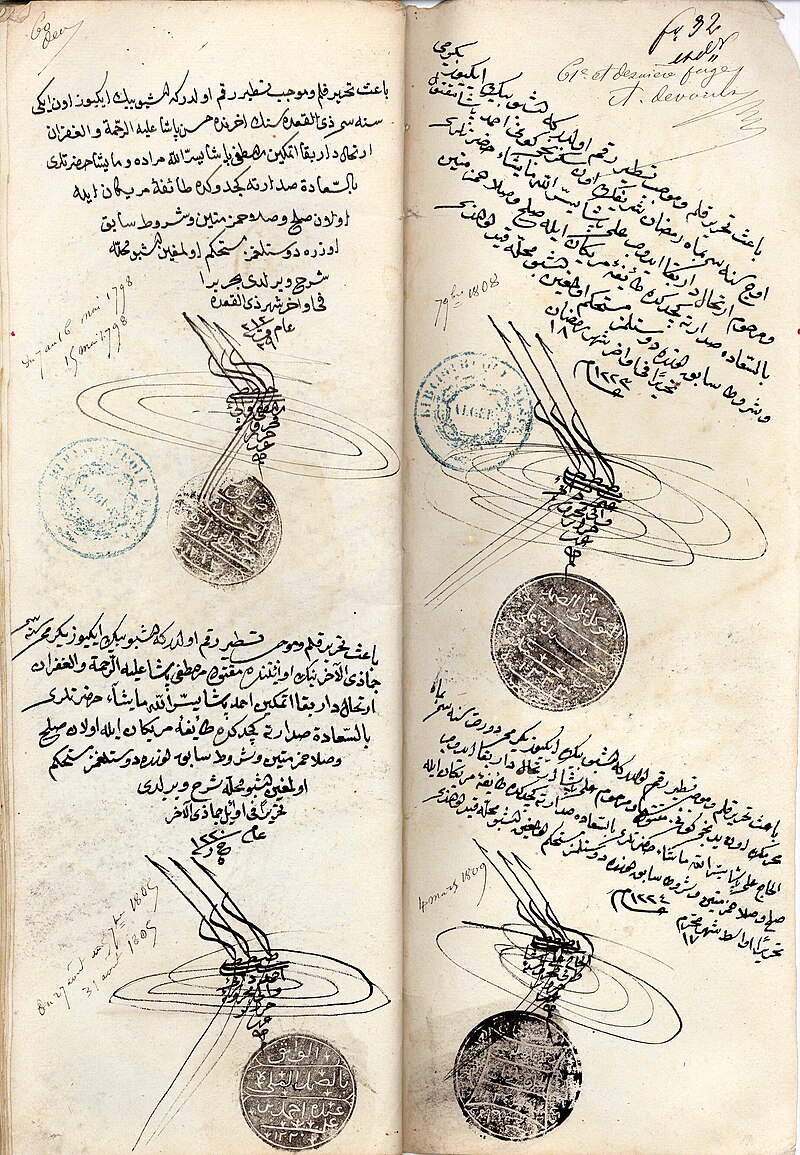
1) The American Tweet: A Diplomatic Reminder Grounded in Archives
The starting point is perfectly clear: a reminder of 1795 and of the treaty concluded in Algiers. This treaty is available in academic and official repositories, including the Avalon Project (Yale University), which publishes the full text of the Treaty of Peace and Amity, Signed at Algiers September 5, 1795. It can also be found in U.S. government archives (GovInfo) within treaty compilations.
This means one simple thing: the embassy’s reminder is not an opinion — it is an institutional, documented chronology.

2) Denial Reactions: “Algeria Didn’t Exist,” Therefore the Archive Must Be “Fake”?
Faced with an archival document, some did not attempt to discuss the historical context, nor even to challenge the treaty text itself (which would already be difficult). Instead, they chose another approach: attacking the very concept of Algeria, as if history could be reduced to an administrative birth certificate dated 1962.
This is precisely the rhetorical trick: deliberately confusing the modern nation‑state with a historical political entity. In 1795, we are speaking of the Regency of Algiers, a center of power endowed with an administration, a taxation system, a fleet, and above all the capacity to negotiate internationally — a capacity confirmed by American diplomatic documentation itself, which describes the Regency of Algiers as a sovereign state.
Therefore, no: a treaty cannot be erased by a slogan. And no: the existence of a treaty signed in Algiers does not vanish because accounts on X decide that it should.
3) “It Was an Ottoman Colony”: A Convenient Phrase, Historically Fragile
Another repeatedly used argument is: “Algeria was an Ottoman colony.” Once again, nuance is key. The U.S. Department of State says the opposite of this caricature: nominal vassalage, but effective independence in the conduct of foreign affairs.
And chronology puts this denial in serious difficulty. Mutual recognition and the formal establishment of relations between the United States and the Ottoman Empire date to 1830–1831, according to official American references regarding Turkey (the Ottoman Empire).
4) What This Controversy Really Reveals: The Obsession with Erasing Algeria from the Historical Landscape
This digital uproar is not an academic dispute. It is a symptom: Algeria becomes disturbing when it appears in world history not as a “created territory,” but as an old, recognized, documented actor.
This phenomenon is not new. In some ways, it echoes the old colonial mechanism: to legitimize domination, one begins by denying prior political existence. Research on the French colonial imaginary shows how colonial rhetoric produced “mythologies” that justified conquest and control by depicting the colonized country as incomplete or “without history.”
What is different today is that the objective is no longer colonization. It is winning a symbolic battle: making people believe that Algeria is a recent apparition, in order to strip it of its historical depth in the Maghreb and the Mediterranean. But documentary reality resists: the treaties are there, the archives are there, and even American institutions state it clearly in black and white.
5) The Core of the Scandal: When a Historical Reminder Becomes Intolerable
Conclusion: Algeria Does Not Need to Be “Rebuilt” — It Has Archives, Evidence, and Historical Continuity
At its core, this episode reveals a single truth: when Algeria reappears in international archives, some people panic. They do not respond with history, but with denial. They do not respond with sources, but with slogans.
Yet diplomacy is not a rumor — it is a record. And that record states that a treaty was signed in Algiers in 1795; that the United States archived it; and that its own institutional historiography considers it an act of recognition.
By Belgacem Merbah
Comments
Post a Comment