A hypocrisy and insolence without limit: Mohamed VI would refuse that his subjects offend the Algerian people!
The King of Morocco devoted part of his speech on the occasion of the 23rd anniversary of his accession to the Throne to Algeria. As usual, he had a polite and consensual speech but in complete contrast with the actions of the agents of Makhzen, who insult, night and day, Algeria, its history, its people, its heritage, its culture, and all the symbols of the Algerian state.
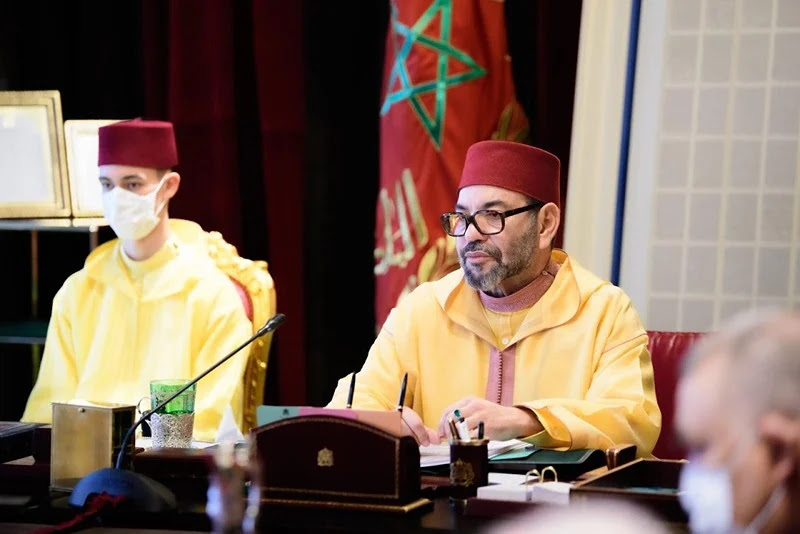
The king of Morocco seems to discover that there is an army of Moroccans, paid by the Moroccan state, who insult Algeria and the Algerian people: "These slanderous remarks about Moroccan-Algerian relations are totally senseless and sincerely dismaying," he said, affirming: "As far as we are concerned, we have never allowed nor will we allow anyone to harm our brothers and neighbors".
In the age of social networks, it is appalling to see the king of Morocco insult the intelligence of 46 million Algerians. How can he maintain that he will not tolerate Moroccans harming the Algerian people? Who can believe the sincerity of this statement, when we know that the Moroccan services finance thousands of Moroccan and sometimes Algerian influencers on Facebook and Youtube to undermine the Algerian people? Who can believe the sincerity of these statements, when we know that Morocco invests annually more than 200 million dollars to buy journalists and lobbyists who lead a merciless war against Algeria and its people? Who can believe these hypocritical statements, when we know that the police pressure in Morocco does not allow any personal initiative not controlled by the Makhzen: all Moroccan influencers on the Internet act on the orders of the Makhzen, moreover, we can notice for example that the themes approached by these influencers are almost the same because they receive every 3 days very precise directives on their editorial line.
It is also surprising to see the king of Morocco addressing directly the Algerian people in an attempt to disavow the legitimate representatives of the Algerian people! There is nothing that binds an Algerian citizen to the king of Morocco who is, moreover, an illegitimate king because he comes from a dynasty that has never defended the interests of the Moroccan people, the Alaouites have consistently allied themselves with foreign powers (Portuguese, Spanish, French, Israeli) to oppress the Moroccan people and by making important concessions against the interests of the Moroccan people (Ceuta, Melilla, the islands of the Mediterranean ceded to the Portuguese and the Spanish)
The Algerian people know their friends and their enemies: the Alaouites have always been enemies of the Algerian people, we know the numerous attempts of the forefathers of Mohamed VI to invade our country, we also know the betrayal of Emir Abdelkader by Abderrahmane, we also see the role of Hassan II in the hijacking of the FLN's plane in 1956, we also have in mind the 1963 aggression, the Moroccan support to the terrorist hordes in the 90s, the unlimited support to the MAK and RACHAD terrorist movements, etc. The Algerian people do not have the memory of a sparrow, the Alawites have never been the friends of the Algerians, it is not today that they will become so.
Finally, this nth hypocritical statement by the king of Morocco is an admission of weakness. It is an attempt to appease the spirits in order to gain time to prepare for a potential armed confrontation which unfortunately seems unavoidable, and this for several reasons that we will develop in a future publication.
Algeria can never forget the crimes of the Makhzen regime against our people, the memory of the three truck drivers cowardly murdered in occupied Western Sahara by Moroccan army drones is still present in the minds of Algerians. We are convinced in Algeria that there can be no reconciliation or common destiny with the Alawite regime. Algeria knows that the salvation of this region will necessarily require the total disappearance of the Makhzen regime. If the Moroccans want a future with the Algerians, they will have to put an end to the medieval Makhzen regime.

Comments
Post a Comment